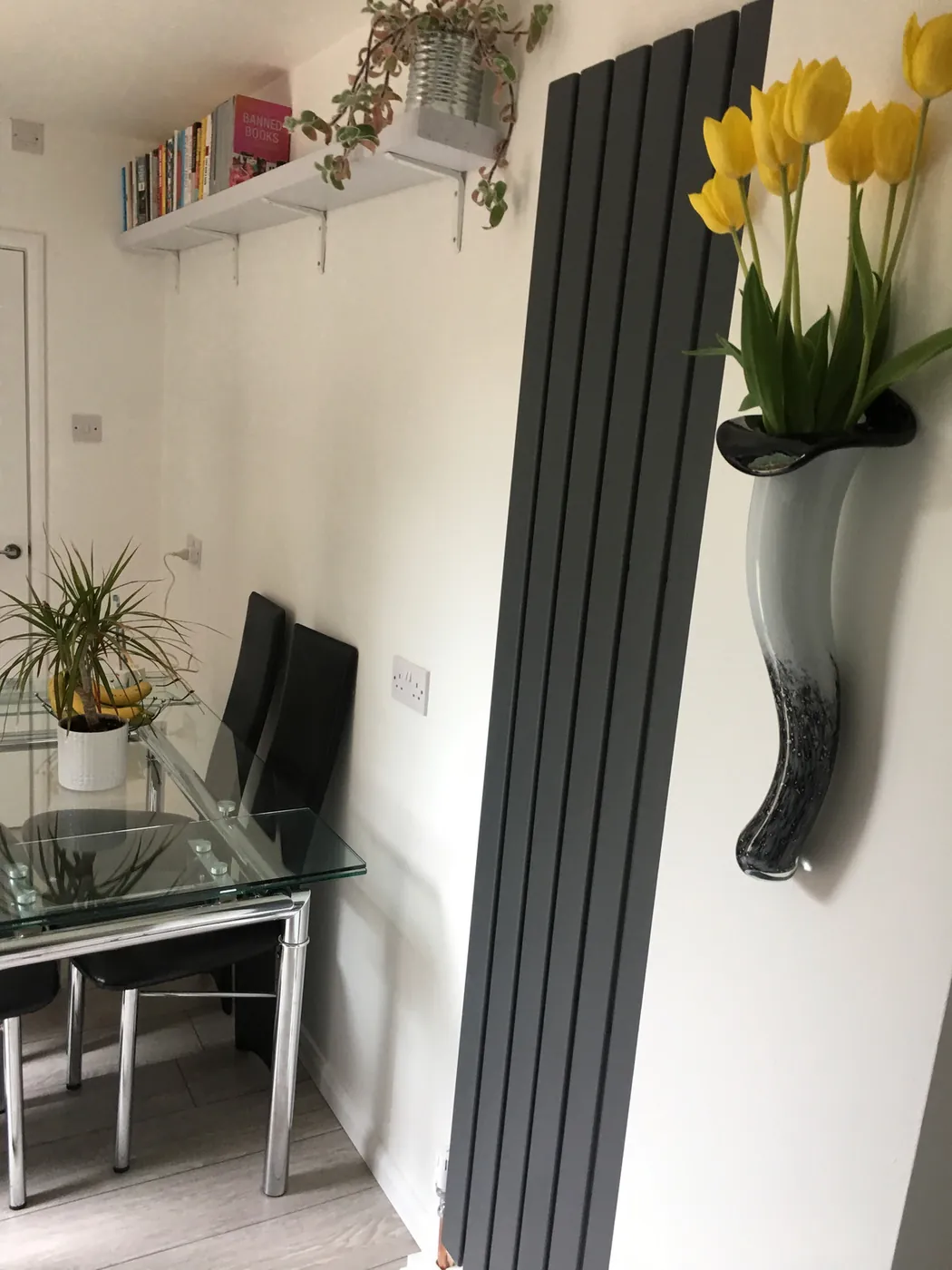
Signs it may need replacing
- Cold spots. Sludge or rust may be blocking the flow.
- Leaks. Water under the radiator or dripping from the valves.
- Noise. Banging, gurgling or clanking can mean trapped air or corrosion.
- Rust. It weakens the radiator and leads to leaks.
- Bills going up while the room stays cool.
Try these first
- Bleed the radiator with a radiator key to release trapped air
- Check the valves and joints for drips
- Have the system flushed if sludge has built up
- Look it over now and then for rust or damage
Choosing a new one
- Size and output. Match the heat output to the room.
- Type. Panel radiators, column radiators and towel rails do different jobs.
- Material. Steel heats up quickly, cast iron holds heat longer, aluminium is light and efficient.
- Fit. Make sure it suits your existing pipework.
When to call us
- The radiator is leaking
- Cold spots or noises come back after bleeding
- You are not sure what size or type you need